Showing posts with label Sightseeing Moldova. Show all posts

Monday, 1 July 2013

Time for kayaking


In May the summer season really started in Moldova with tropical temperatures: perfect weather for kayaking.  Fortunately there are some big rivers in Moldova, like the Nistru, where you can kayak. Usually this river is calm and the environment green. However, there are not many places where kayaking is offered. At least they are hard to find on internet.
No kayaking for French students


When a group of French students came to Horodiste during the last week of May they also planned one day of kayaking. On their request we found a cheap company in Vadul lui Voda. (15 euro p.p for a whole day, including guide)
To check out this company we went a day with team Vent d’Est and some other people for a trip of around 18 kms. The guide was a Russian speaking man with a beard and a lot of experience in kayaking. Shortly after the start we had a break as our guide needed to buy some cigarettes.  The next stop was for a picknick on shore while our guide had to buy lighter. Meanwhile we made a fire for shaslick (bbq).
Kayaking itself was relaxed, despite the need of some physical effort of the arms ofcourse. The way back, downstream was even better and much quicker. 

However, the day we were supposed to kayak with the students of France, the guided didn't have the life-jackets as promised, despite emphasizing the need of it. Unfortunately this meant a no-go for the students. Instead they had a beach day in Vadul lui Voda.

Weekend of Kayaking
Next morning however I got a call if I wanted to volunteer on a weekend trip kayaking in the North of Moldova. I said yes without even thinking of the weather forecast (which was not really promising). This trip was organized by Explore Moldova and we were with 16 people and 8 boats in total.
The trip didn’t start as planned as there were problems in transporting the kayaks: it is not always easy to organize something as you often can’t rely on agreements. However this wasn’t a reason to cancel the trip as another way of transporting the kayaks was found.
Instead of starting kayaking in the evening we camped close to Bursuc and took off next day. Fortunately also the weather was different than expected: not a single (rain) drop during the whole trip. While descending the Nistru we saw on both sides green hills, sometimes rocky, we passed bathing cows along the shore and regularly we stopped to stretch the legs and recharge energy (with a lot of energetic food). Yes, we were taken well care off.
In the evening we made it a fire and cooked a meal while enjoying the sunset . The next morning we continued peddling to Saharna. Again it was a beautiful day and at the end of the day we arrived close to the monastery.

Little hike
 
Cooking on shore
Kayaking with Vent d'Est

I don't have to miss kayaking as Vent d'Est bought various inflatable kayaks. Starting in the village of Busiusca (around 6 km from Horodiste) we will offer a tour to Tipova Monastery... Here some pictures of the try-out.
Frog around Buciusca


View close to Tipova Monastery

The kayaks


Monday, 24 June 2013

We made it: The Green Run

 
Saturday the 22nd of June was the day of the Green Run. The idea for this event was born at the beginning of the year with another volunteer, after a refreshing run through cold winter weather. "Wouldn’t it be nice to participate in a race of about 10 or 20 kilometers?" But after searching the internet we couldn’t find anything…. so ... we decided that we can organize it ourselves. We shared the idea with Leonid who wanted to join us and who and who gave shape to the event.

Ups and downs
The organization was not always smooth and several times it was almost put to a stop. First, the idea was to organize it in Horodiste, but for practical reasons the location moved to Orhei Vechi. In May, we explored a possible trail and personally I was immediately sold for the location and I regretted that I couldn’t participate myself. It is a fairly flat course with a few hills. It offers little shade, but a great view.

Location of the Green Run
In Orhei Vechi we had the cooperation of the former mayor and his wife. Together with several other women they took care of the catering of the event. Also a few young people from Trebujeni helped with the organization by building up and breaking down. We also had the cooperation of Mr. Lazari Povetska, head of the athletics departmet at the university. He came to the event with the three judges and a number of elite runners in Moldova and helped us with advice and enthusiasm.
Luckily we were not the only ones in Moldova who do like to run around in the nature and although the number of registrations came only in motion during the last week, there were almost 70 participants.

No volunteers in Moldova?
During a recording for the Moldovan television on volunteering they asked me why 'in Europe' volunteering is popular and not in Moldova. I couldn't give a real and after this event even less. This event was never possible without the help of all the volunteers: Moldovans, foreigners, the local young people and the jury.

Also, the participants both Moldovan and Foreigners, young and old...

thanks all of you, you made it!

Some pictures of the day...

Start of the 10 k
Running the 10 k
Running the 5 k
 
Podium 10 k (trainer Mr. Lazari, receving the price on behalf of Natalia Klipka)
Podium 500 m - boys
Finish kids run
Teamwork!


Friday, 31 May 2013

Climbing with Teenagers in Orhei Vechi


There are not many places to climb in Moldova and the few existing possibilities are hardly known, even by locals and even in Orhei Vechi, one of the most touristic places in Moldova.


Climbing site Orhei Vechi


The wall

View from the top

I had the chance to volunteer in a project organized by Outdoor Leadership Centre to familiarize local teenagers with rock climbing. Children are in general good climbers and it is a way to acquire some useful skills and abilities, like problem solving thinking, taking responsibility and it increasing strength and body awareness.

The day was organized for teenagers in Orhei Vechi.  A week before we talked to them to check if they were interested and to schedule a date. The first day, 6 enthusiastic teenagers showed up. After some hesitation in the beginning, they soon climbed the wall like they have done it their whole life. The second day, the children from the first day learned how to belay people and they belayed the other children.

While we collected equipment after climbing, the teenagers cleaned the river. To reward the children for their work Agropensiune Butuceni provided placinta, fruit juice and ice cream.

Thanks to this successful experience, the 5th of June will take place the next climbing event for local children.
Rest at agropensiune Butuceni

Monday, 15 April 2013

Day trip to Bender and Tiraspol

At Bender Fortress

A look through Bender Fortress


Being a year in Moldova there are certain things I definitely want to see from the country. Actually the list is still quit long: the 100 knolls (a curious natural phenomenon), criva (with the third largest gypsum cave in the world), wineries (Moldova has the largest subterranean wine cellars in the world) to name just a few things.

Country within a country
One of the things on the list is going to Tiraspol, the capital of a separate region in Moldova with its own government and currency. Its independency is not recognized by most countries and Moldova considers it as "an autonomous territorial unit with special legal status". It is often characterized as a resort for criminals and traffics of all kind (drugs, weapons, organs). Most embassies advise to be extra cautious, but in practice most tourists visit the places without major problems. Most people go there to walk along the main street, visit the monuments and to take a walk along the River. A popular souvenir from this place is a bottle of cognac from the Kvint factory.

Passing the border

Last Sunday I finally planned a visit, though planning is a big word for just going to the central bus station and look for a bus. It was easy to find as a man was shouting ‘Bender’. For 25 Lei we stepped in. We needed to complete a registration form to pass the border Moldova – Transnistria. One part stayed with the customs authorities. The other part we needed to keep until leaving the country. This done we passed the border without any problems.

Bender fortress
One us wanted to take a picture of the sign Bender as it is one of the characters in the famous cartoon ‘The Simpsons’. Unfortunately they use the Russian alphabet here: so if it would make sense anyway to take a picture of it, now it didn’t make any.

However Bender is also interested for another reason, as it is the location of an important medieval fortress. Originally it was a Roman fortified city known as Tighina and in 1408 it was mentioned as an important customs post. Under the rule of Stefan cel Mare the fortress became part of larger system of fortification together with Soroca, Hotin and Cetate Alba against the Tatars. In 1538 the fortress was conquered by the Turks and renamed as Bender (which means port in Turkish). In the 18th century the fortress has been modernized by the prince of Moldova Antioh Cantemir under supervision of the Turks.
During the Russo-Turkish wars the city fell 3 times under Russian rule. In 1918 as part of Bessarabia, the city belonged to Romania and it was also a place of heaving fightings during the war between Moldova and Transnistria (1990 – 1992).

For 50 Lei you can get a guided tour through the complex. Despite the clear signing (really, I guess we were talking too much) we first went the wrong way. Inside the fort is a museum and you get a detailed explanation of different torture instruments. After that you have the opportunity to walk along the walls, if you aren’t afraid of heights. 

Height fear

Tiraspol
We continued our way to Tiraspol by a trolleybus. Coming into Tiraspol we passed Sheriff footbal stadium, Sheriff petrol station, Sheriff supermarket and we could also have seen various other businesses under this name.
The idea was to walk along the main street, see the Soviet monuments and go back along the Dniester River… and that’s exactly what we did. 
From the governmental palace with the famous statue of Lenin we walked down the main street, passing a war memoriam. This monument remembers the victims of the war in Afghanistan and the war with Moldova between 1990 and 1992. Tiraspol has a nice location along the Dniester River which allows for a nice walk. One day is not enough to get a real grasp of this city, but it was worth the visit.

Statue of Lenin in Tiraspol

Tuesday, 19 March 2013

Ma(r)tisor in the forest

When I say to my students of English that I have been to the forest, they often laugh at me and say there are no forests in Moldova, but last Sunday we for sure walked through the forest, the forest of Orhei, for a hike organized by Explore Moldova.

Curchi church
Eglise de Curchi
Museum Closed
Le musée fermé
Start walking from Donici
Départ de la marche à partir de Donici
Start from a fabulous place
It was a windy, chilly day, let’s say a good day for fresh air and sun light. The hike started at village Donici, the birthplace of Moldovan fabulist Alexandr Donici. The family estate operates a museum with pieces of the life of Donici. As the museum only opens at 10.00 we decided to skip the museum and to start walking uphill from the church. Special about the church is its shape and the mosaic windows which are not very common in Moldova. 

Missed performance
From village Donici we walked through the forest to monastery Curchi. After a couple of kilometers we passed the house of the forest ranger. Usually there is a place where pigs are reared to populate the forest, but today the pigs were gone. So we had to miss the planned performance of our guide Leonid, who planned to scare the pigs from one side so we could make pictures from the other side… the pigs have been escaped. 

Mushrooms
Champignons
Spring flowers
Fleurs du printemps


Goodbye winter
Au revoir l’hiver
Goodbye winter

We continued our way through the forest. Some leftovers of ice, buds on the trees and upcoming flowers showed the transition of the forest from winter to spring. Also, we saw a lot of wild garlic, a typical spring crop and easy to recognize because of its strong smell. Unfortunately there were also many plastic bottles which we collected and brought to Curchi, to put them in an almost empty collection point. This is the village where Curchi monastery is located. The monastery is known for its beauty. Looking at the fancy cars in front of the monastery there doesn’t seem to be a lack of money in this place. We had a lunch close to the monastery, where a dog with a special coupe took our attention and got a photo shoot. 
                 
Curchi monastery
Le monastère de Curchi
In the picture
Collecting wild garlic
Ramassage d’ail sauvage

From the Monastery we walked uphill where we enjoyed a beautiful view of the monastery and surrounding hills and fields. Back in the forest we could hear the loud noise of a woodpecker and a little further we spotted it. This meant another photo-shoot. With my camera the picture is more like a puzzle picture: find the woodpecker. Everywhere in the forest we saw traces of animals: footsteps, places where deer sleep, holes and the remains (only the fur) of a rabbit. Also, there were many types of mushrooms in the most beautiful colours. 

Where is the woodpecker
Où est le pivert
Animal traces
traces d'animaux


Remains of a rabbit
restes d'un lapin
Ma(r)tisor
We made our way through the forest, trying to avoid branches sweeping in the face, not always with succes. We ended up on a ridge at the edge of the forest to enjoy another nice view.

The last part of the hike we followed a dry riverbed leading us down to village Donici where we started the journey. Just out of the forest we saw martisor or matisor. Two of my fellow hikers explained that it is called Matisor, referring to the soft fur of cats or Martisor, referring to the start of the spring. I can’t choose...

Back to Donici
Rentrer à Donici
walking to the ridge
marche à la crête


Ma(r)tisor

Martisor dans la forêt

Quand je dis à mes étudiants d'anglais que j'ai été à la forêt, ils rient souvent de moi et disent qu'il n'y a aucune forêt en Moldovie, mais dimanche dernier nous sommes allés marcher dans la forêt, la forêt d'Orhei, pour une excursion organisée par Explorent la Moldova.

Un  endroit fabuleux

C'était un jour venteux et froid, disons un bon jour pour la lumière aérienne et un frais soleil. L'excursion commençait du village Donici, le lieu de naissance de fabuliste moldave Alexandr Donici. La propriété familiale est  un musée avec des pièces de la vie de Donici. Comme le musée n’ouvre qu’à 10.00 heures, nous avons décidé de ne pas aller directement au musée mais de commencer à marcher en direction de l'église. L'église a une architecture spéciale et les fenêtres en mosaïque ne sont pas très communes en Moldovie.

Objectif manqué

Du village Donici, nous avons marché par la forêt jusqu’au monastère Curchi. Après deux ou trois kilomètres, nous avons passé la maison du garde forestier. D'habitude, il y a un endroit où les porcs sont dressés pour peupler la forêt, mais aujourd'hui les porcs sont partis. Donc, nous avons dû changer nos objectifs prévus par notre guide Leonid, qui a planifié d'effrayer les porcs pour nous permettre de faire des photos…

Aurevoir l’hiver.

Nous avons frayé notre chemin par la forêt. Quelques restes de glace, des bourgeons sur les arbres et des fleurs renaissantes montrent la transition de la forêt d'hiver en celle du printemps. Aussi, nous avons vu beaucoup d'ail sauvage, une récolte printanière typique et facile à reconnaître, à cause de sa forte odeur. Malheureusement, il y avait aussi beaucoup de bouteilles en plastique que nous avons rassemblées et avons apportées à Curchi, afin de les mettre dans un point de ramassage presque vide. Ceci, est le village où le monastère Curchi est localisé. On reconnaît le monastère pour sa beauté. Regardant les belles voitures garées devant le monastère, il ne semble pas y avoir un manque d'argent à cet endroit. Nous avions prévu un déjeuner près du monastère, où un chien avec une fourrure particulière a capté notre attention et nous avons pris des photos. 

Du Monastère, nous avons marché en direction de l’endroit où nous avions remarqué la belle vue sur celui-ci, sur les collines et champs environnants. Derrière, dans la forêt, nous pouvions entendre un bruit puissant provenant du pic et un peu plus éloigné. Ceci a déclenché un nouveau tir de photos. Avec mon appareil photo, les photos ressemblent davantage à une énigme : trouvez le pic. Partout, dans la forêt nous avons vu dessiner des traces d'animaux : des pas, des endroits où des biches et des daims dormaient, des terriers et les vestiges (seulement la fourrure) de  lapin. Il y avait aussi plusieurs types de champignons et de différentes, très belles couleurs.


Tuesday, 5 March 2013

Training in Moldova

Traduction en français ci dessous
 
Yes, I was disappointed that our training for EVS volunteers would be in Moldova and not in Kiev –Ukraine (as is usual). Instead we went to Lalova, a village on the border of the Dniester River, about 100 kms driving from Chisinau and about 9 kms from Horodiste (the village where Vent d’Est is constructing an eco-pension and fruit elaboration factory). I knew however that Lalova is a village with a beautiful view over the Dniester River and that the hostel “Hanul Lui Hanganu” is very nice.

We went to Lalova by mini-bus and in the back of the bus we could fully enjoy the holes in the road that still are not an unusual thing here. In the hostel we shared a room, with some typical Moldovan elements, like a carpet on the wall. Every day we got to taste different Moldovan specialities with three meals and two coffee breaks: placinta, mamaliga, varenyky, sarmale, bors, stuffed apple and so on... They also served some homemade wine which gave our mouth and teeth a purple-colour, perfect to play werewolves afterwards.

We did different tourist activities: a tour by horse and cart, walking to Tipova Monastery, painting Easter eggs, dancing hora and wine tasting in the cellar.

By horsecart
En charette

Walk to Tipova Monastery
En marche jusqu’au monastère de Tipova


Painting Easter eggs
Peinture des œufs de Pâques


Learning with a lotus and hats in different colours

The training was very nice as we not only talked about our experiences so far, but we got also some suggestions about how to solve problems. They suggested for example to see a problem as a lotus. You first define one problem and you break that problem up in 8 pieces. Next you define 8 causes for each of the 8 subproblems.
To solve the problem it was suggested to wear hats of different colours. For example you solve a problem by getting information (blue hat), by being critical (black hat), by being positive (yellow: like the motto of Johan Cruijf: every disadvantages has it advantage), being creative (green: invent some crazy idea to solve it), by looking at your feelings (red hat) and at last you take the blue hat to think logically about what is the best decision.


Learning with a lotus and hats in different colours
Apprentissage par le lotus et les chapeaux de couleurs différentes
The training lasted 4 days. It was nice to stay a few days in this place, because places like Tipova Monastery are hard to visit for one day as there is only one bus connection per day. Lalova - Chisinau: leaving 6 AM and Chisinau - Lalova: leaving 3.15 PM.
Overall the training was better than I expected. It was not only more interesting, but also more fun than I thought it would be and not only because of my low expectations:) So a big "thank you" to the trainers, volunteers and the staff of Hanul Lui Hanganu: Multsumesc mult!


Formation en Moldavie


Oui, moi-aussi étais déçue que notre formation pour les volontaires SVE etait en Moldovie et pas à Kiev – en Ukraine, comme c’est d'habitude le cas. Nous sommes allés à Lalova, un village au bord de la Rivière  du Dnistr, environ 100 kms  de Chisinau et environ à 9 kms de Horodiste (le village où Vent d'Est construit une éco-pension et un atelier d'élaboration de sirop. Je savais cependant que Lalova était un village avec une belle vue sur le Dnistr et que l’auberge "Hanul Lui Hanganu" est très agréable.

Nous sommes allés à Lalova avec un minibus et au fond du bus, nous pouvions apprécier les trous dans la route qui sont  toujours une chose habituelle ici. Dans l’auberge, nous avons partagé une pièce, avec quelques éléments moldaves typiques comme un tapis sur le mur. Chaque jour, nous goûtions des spécialités moldaves avec trois repas et deux pauses café : placinta, mamaliga, varenyky, sarmale, bors, pomme farcie et cetera... Ils ont aussi servi du vin fait maison qui a fait devenir notre bouche et nos dents rouge pourpre, parfaites pour jouer aux loups-garous ensuite.

Nous avons fait différentes activités touristiques : un tour en charrette tirée par un cheval et, une randonnée jusqu’au Monastère Tipova, atelier peinture des oeufs de Pâques, atelier de danse moldave  « La Hora » et dégustation des vins et des eaux-de-vie dans la cave.

Étude avec un lotus et des chapeaux de différentes couleurs
La formation était très agréable, nous avons parlé de nos expériences vécues jusqu' à présent, mais aussi nous avons obtenu quelques suggestions sur la façon de résoudre des problèmes.
Ils ont suggéré de voir le problème comme un lotus. Vous définissez d'abord un problème et vous partagez ce problème en 8 morceaux. Ensuite vous analysez  8 causes pour chacun des 8 sous-problèmes. Pour résoudre le problème, il a été suggéré d’analyser sous les différents angles que proposent les chapeaux de couleurs. Par exemple,  vous résolvez un problème en obtenant des informations (le chapeau bleu), par les critiques (le chapeau noir), par le positivisme (jaune : comme la devise de Johan Cruijf : tous les inconvénients ont des avantages), en étant créatif (vert : inventez une certaine idée folle à résoudre), en affirmant  vos sentiments (le chapeau rouge) et enfin vous prenez le chapeau bleu pour réfléchir logiquement à la meilleure décision.   

La formation a duré 4 jours. Il était agréable de rester quelques jours dans cet endroit, parce que les lieux comme le Monastère Tipova sont difficiles à visiter en un jour comme il y a seulement une seule connexion de bus par jour. Lalova - Chisinau : départ 6h00 et Chisinau - Lalova : départ de 15 h 15.

De façon générale, la formation était meilleure que ce dont je m’attendais. C'était non seulement plus intéressant, mais aussi plus amusant  que ce que j'ai pensé qu'il serait et non seulement à cause de mes faibles espérances  :) Donc grand merci aux formateurs, qui se portent volontaires et aux personnels de Hanul Lui Hanganu : Multsumesc mult!


Sunday, 27 January 2013

Into the cave of suprises

Traduction ci-dessous

Moldova has several interesting caves. In the North of Moldova for example, you can find the third largest gypsum cave of the world. Last Saturday however I went to another interesting cave, the cave of Surprises. This trip was organized by explore-moldova. It was a rainy day, so perfect weather for caving. The total distance of the cave is about 1.7 km and it took around 4 hours, including an underground picnic, photo shoots with bats and waiting for other people while they were trying to squeeze their way between the rocks.

Narrow start
Début étroit
The cave is located close to the city Criuleni, in a forest line on the right bank of the Dniester River, about 1.5 hours driving from Chisinau. The cave was discovered in the 1970s and it has three entrances. The cave is a result of tectonic movements in blocks of limestone sediments, which formed a network of cracks and holes. There are several larger halls, with names like, Golden Ring, Elevators, Metropolitan, and Cinema Hall) and some deep wells.

Expedition underground
Expédition souterraine
The cave of Surprises is especially interesting as a physical challenge, as it is not easy to make your way through this cave. If your body is a little bit bigger than average you will even get stuck at some point. Although it was small it didn’t feel claustrophobic. When climbing and descending the walls it was even pleasant that there was not so much space. This way there was no need to be afraid of falling.

In the cave we saw various bats, hanging upside down against the wall. BTW...the cave of surprises is a relatively young cave, which is also true for the paintings made with clay.
Dans la grotte, nous avons vu plusieurs chauves-souris, accrochées à l'envers contre le mur. BTW ... « la grotte aux surprises » est relativement jeune, qui est aussi intéressante pour les peintures faites avec l'argile.
It was a lot of fun so I’m looking forward to the next trip into the cave, this time with a group of children. The cave is open for everyone, but especially if you go for the first time it is recommended to go with someone who knows the cave, and of course you need to be well equipped with at least headlights, spare batteries, first aid kit, a small snack and something to drink.

Coming out of the cave
La sortie de la grotte
 
Some facts about the cave:
Length: 1700 meters
Humidity: 75/80%
Temperature: 12-14 degrees (all year long)
This cave doesn't have stalactites and stalagmites, but if offers a sporty challenge


Dans la « grotte aux surprises »


La Moldavie a plusieurs grottes intéressantes. Au Nord de la Moldavie, par exemple, vous pouvez trouver la troisième plus grande grotte de gypse du monde. Cependant, samedi dernier, je suis allée dans une autre grotte intéressante, la « grotte aux surprises ». Ce voyage a été organisé par l'explorer-Moldova. C'était un jour pluvieux, parfait, un temps pour la spéléologie. La distance totale de la grotte est d’environ 1.7 km, ce qui revient à  4 heures d’exploration, en comprenant un pique-nique souterrain. Plus loin, la photo prise avec des chauves-souris a été faite alors que j’attendais  des personnes tandis qu'ils essayaient de se frayer un chemin entre les roches.
 
La grotte est située près de la ville Criuleni, au bord d’une forêt sur la rive de la Rivière « Dnistr », à environ 1 heure et demi de Chisinau en voiture. On a découvert la grotte dans les années 1970, celle-ci a trois entrées. La grotte est le résultat de mouvements tectoniques dans les blocs de sédiments calcaires, qui ont formé un réseau de fentes et de trous. Il y a plusieurs grands halls, avec des noms comme, l'Anneau d'or, des Ascenseurs, Métropolitains et le Hall du Cinéma et quelques puits profonds.
 
La « grotte aux surprises » est particulièrement intéressante car elle permet un défi physique, comme il n'est pas facile de se frayer un chemin dans cette grotte. Si votre corps est un peu plus grand que la moyenne vous serez même coincés à un certain moment. Bien que ce soit petit et étroit, on ne se sent pas claustrophobe. Ce fût agréable de monter et de descendre les murs même en ayant peu d'espace. Le chemin existait, aucun besoin d'avoir peur de tomber.
C'était très amusant donc j'attends avec impatience la prochaine expédition dans la grotte, cette fois-ci avec un groupe d'enfants. La grotte est ouverte pour tout le monde, mais si vous y allez pour la première fois, on vous recommande d’y aller avec quelqu'un qui la connaît et bien sûr, vous devez être bien équipés de lampes, de batteries de rechange, la trousse de premier secours, un petit en-cas et quelque chose à boire.
 
Quelques informations sur la grotte :
Longueur : 1700 mètres
Humidité : 75/80 %
Température : 12-14 degrés, toute l'année
Cette grotte n'a pas de stalactites ni des stalagmites, mais celle-ci offre un défi sportif certain !


Wednesday, 2 January 2013

Happy Christmas

La truduction en francais suit

In Moldova Christmas is celebrated not so much the 25th of December, but mostly on the night from 6th to 7th of January, because in Moldova they mostly apply the Gregorian calendar
In some parts however, like in Slobozia Mare Christmas is celebrated the 25th. So the administration of Prutul de Jos that we wanted to visit was unfortunately closed.
Last time we went to Prutul de Jos it was already dark and it was covered in fog. Fortunately the 25th the weather was clear and there was still snow. A real white Christmas.

This walk again was to assist Explore Moldova in describing routes for the Moldova Holiday website.

Myth busting
Before walking in Prutul de Jos we walked another part of the Trajan Wall. It was indicated on a detailed topographic map as such. We first went again to the Frunzari hill, also known as "Kurgan" (which is Russian for manmade hill for e.g. defense, cult or burial purpose). The small hillson this ridge, in front of Frunzari hill that we thought could be part of the defense system were in fact part of the irrigation system. Also, some hills on top of this and other ridges seem to be created to prevent erosion, because down from them there are signs of erosion.
Still the Frunzari hill, could well be part of the Roman defense system, known as Trajan Wall as this line marked the frontier of the Roman Empire. A portion of Moldova's southern territory, about 5500 square kilometers in surface comprised between the lower course of the Prut River and the Dniester River estuary, was organized as an extension of the Roman province of Moesia Inferior and served as an eastern outpost of ancient Dacia. This was designed by Rome to secure the empire's strategic control over the mouths of the Danube and the western shores of the Black Sea.(http://www.moldova.org/page/history-2-eng.html) The frontier was composed of a road following the border, military stronghold, a three meter vallum, 10-12 meters wide, reinforced with wooden palisades and a ditch. Some other sources call it Limes Transalutanus. This construction was started in 107 under the command of Marcius Turbo, and developed under Iulius Severus (120-126); the final stage was performed under Septimus Severus (193-211 d.C.). (http://en.wikipedia.org/wiki/Limes_Transalutanus) Later this fortification line was re-used by the of of the Thervings Athanaric, therefore named Athanaric's Wall. (http://en.wikipedia.org/wiki/Athanaric%27s_Wall) For more recordings of scientific discoveries see an article by Dorel Bondoc in the Romanian Journal of Archeology, 2000.  Also see: http://commons.wikimedia.org/wiki/File:Roman_Dacia.svg
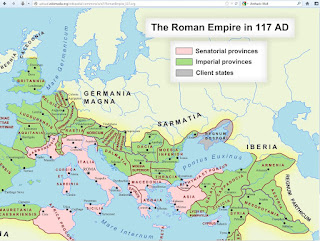
The Roman Empire and its Walls
 
Remainings of the Wall (left the rampart and the ditch at the rigth)
Walking along the ridge of the Frunzari hill offers a nice view over the area. We followed the ridge until we saw two dams. The dams were located in a kind of bowl. The damns are surrounded with hills from all sides. As the place inside the two dams was covered with trees it doesn’t seem to be in use for a long time. Continuing the damn we walked again on the Trajan Wall, recognizable by the earthen wall, ditch and the mould. This part of the wall is not made on top of the ridge but just below it. This provided a short cut to Frunzari hill (former frontier fort). 

Prutul de Jos uncovered

I already passed Prutul de Jos for three times and it was always covered in fog or it was dark already. Today it wasn’t. It was a sunny day and there was still some snow… 

Prutul de Jos uncovered


We parked the car along the main road in Slobozia Mare and went right following the direction of the Prutul de Jos administration. Depending on the time of the year and the water level there are different options for a walk. You can check at the administration for more information. They also have some information available in English.

Starting from the railway crossing we walked on a kind of peer within the lake. After 2.5 kms we reached a river. Here we turned left. Along the road we saw different birds and traces of wild boar and other animals. We also passed a land marking with the colors of the Romanian and Moldovan flag. It is not clear which one of them as these flags have the same color. We continued walking along the river, which curved to the left, joining the river Prut. We continued walking until a point where the river bends right. As the water was frozen we could follow the river (crossing another small river). Here we saw again a landmark in the same colors. Taking the left, following the railway we went back to the start point….  

Outdoor opportunities
Prutul de Jos is an area full of outdoor opportunities: walking or canoeing through it, cycling around it, crossing riveres with robes, etcetera. Next day we talked to the director of Prutul de Jos in Chisinau and he was interested in organzing tourist activties. As it is a protected area all activities need to be coordinated with the scientific institute. However, it is already accessible for individual tourists when asking permission at the administration and by paying an entrance fee. So what's holding you back to go there?


Joyeux Noël

En Moldavie, Noël est célébré non pas tant le 25 Décembre, mais surtout dans la nuit du 6 au 7 Janvier, car en Moldavie, ils appliquent surtout le calendrier grégorien.
Dans certaines régions, cependant, comme à Slobozia Mare, Noël est célébré le 25. Ainsi, l'administration de Prutul de Jos que nous voulions visiter était malheureusement fermée.
La dernière fois que nous sommes allés à Prutul de Jos, il faisait déjà nuit et il y avait beaucoup de brouillard. Heureusement, le 25, le temps était clair avec beaucoup de neige. Un vrai Noël blanc.

Cette promenade avait pour but d'aider à nouveau Explore Moldavie en décrivant des itinéraires pour le site de Holiday Moldavie.

Casse le mythe
Avant de marcher dans Prutul de Jos, nous nous sommes promenés du coté du mur de Trajan. Il était indiqué sur une carte topographique détaillée en tant que tel. Nous sommes d’abord retournés sur la colline Frunzari, connue comme "Kurgan" (ce qui en russe signifie la « colline humaine », par exemple pour la défense, le culte ou qui a pour but la sépulture). Le petit Hillson, cette crête, en face de la colline Frunzari, dont nous avons d’abord pensé, qu’il pouvait faire partie du système de défense faisait en réalité partie du système d'irrigation. En outre, quelques collines au-dessus de celles-ci ainsi que sur d'autres crêtes semblent être créées pour empêcher l'érosion. En effet, au- dessus de ceux-ci, il y a des signes d'érosion. La colline Frunzari pourrait bien faire partie du système de défense romaine, connue sous le nom de « le mur de Trajan », cette ligne marque la frontière de l'Empire romain. Une partie du sud du territoire de la Moldavie, environ 5500 kilomètres carrés de surface comprise entre le cours inférieur de la rivière Prut et l'estuaire du fleuve Dniestr, a été organisée comme un prolongement de la province romaine de Mésie inférieure et a servi d’avant-poste oriental de l'ancienne Dacie. Il a été conçu par Rome pour assurer le contrôle stratégique de l'empire sur les bouches du Danube et les rives occidentales de la mer Noire. (Http://www.moldova.org/page/history-2-eng.html). La frontière est constituée d’une route, d’un bastion militaire, d’un rempart de trois mètres, et de 10-12 mètres de large, renforcée par des palissades en bois et d’un fossé. Certains l’appellent aussi “la ligne Transalutanus”. Cette construction a été commencée en 107 sous la commandement de Marcius Turbo et prolongée sous Iulius Severus (120-126); l’étape finale a été exécutée sous Septimus Severus (193-211 d. C.). (http://en.wikipedia.org/wiki/Limes_Transalutanus). Plus tard, cette ligne de fortification a été réutilisée par l'Athanaric de la Thervings qui fût donc appelée le « mur d’Athanaric ». (http://en.wikipedia.org/wiki/Athanaric%27s_Wall).Pour plus de détails sur les découvertes scientifiques, voir l’article deDorel Bondoc au Journal Roumain de l'Archéologie, 2000. Voir aussi: http://commons.wikimedia.org/wiki/File:Roman_Dacia.svg

La marche à pied le long de la crête de la colline Frunzari offre une vue agréable sur la plaine. Nous avons suivi la crête jusqu'à apercevoir deux barrages. Les barrages sont situés dans une sorte de cuvette. Les barrages sont entourés de collines de tous les côtés. Comme l'endroit à l'intérieur des deux barrages est recouvert d'arbres, il semble ne pas être utilisé depuis longtemps. En continuant à marcher le long des barrages, nous sommes retombés à nouveau sur le « mur Trajan », reconnaissable car fait de terre, et semblable à un fossé. Cette partie du mur n'est pas au-dessus de la crête, mais juste en-dessous. Ceci a fourni un raccourci pour aller à la colline Frunzari (l'ancien fort de la frontière).

Prutul de Jos à découvrir
Je suis déjà allée à Prutul de Jos trois fois et  il faisait toujours brouillard ou sombre. Aujourd'hui, ce n'était pas le cas. C'était un jour ensoleillé avec un reste de neige…
Nous avons garé la voiture le long de la route principale dans « Slobozia le Grand »  et nous avons suivi la direction de l'administration de Prutul de Jos.
Selon le moment de l'année et le niveau de l'eau, il y a différentes options de promenade. Vous pouvez les vérifier auprès de la mairie et obtenir plus d'informations. Ils ont aussi quelques informations disponibles en anglais. 
Au départ du chemin de fer, nous avons marché le long d’un lac. Après 2.5 kms, nous avons atteint une rivière. Ici, nous avons tourné à gauche. Le long de la route, nous avons vu différentes sortes d’oiseaux et des traces de sanglier ainsi que d'autres animaux.
Nous avons aussi passé une balise avec les couleurs du drapeau roumain et moldave. Nous avons continué à marcher le long de la rivière, qui se courbait vers la gauche, rejoignant la rivière, Prut. Nous avons continué à marcher jusqu'à un point où la rivière plie vers la droite. Comme l'eau était gelée, nous pouvions suivre la rivière (croissant ainsi une autre petite rivière). Ici, nous avons vu de nouveau un point de repère dans les mêmes couleurs. En prenant à gauche, après le chemin de fer, nous sommes retournés au point de départ. 

Possibilités des activités extérieures
Prutul de Jos est un endroit qui regorge de possibilités d’activités extérieures : marche à pied ou canoë-kayak, cyclisme, plusieurs possibilités le long des rivières, et cetera. Le jour suivant, nous avons parlé au maire de Prutul de Jos à Chisinau,  il était intéressé par les activités touristiques organisées. Comme c'est un secteur protégé, toutes les activités doivent être coordonnées avec l'institut scientifique. Cependant, il est  déjà accessible  aux touristes en demandant la permission à la mairie et en payant un droit d'entrée. Donc, qu'est-ce qui vous empêche d’y aller?